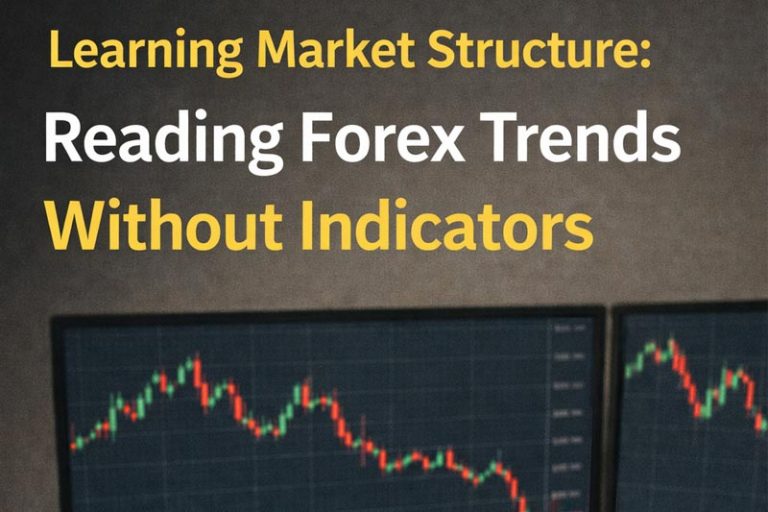
Many traders thrive in trending markets where price momentum provides clear buy or sell opportunities. But what happens when the market goes flat? In forex, a sideways market can leave traders confused, frustrated, or inactive. A sideways or range-bound market occurs when price moves horizontally within defined support and resistance levels—neither rising nor falling significantly.
The good news? Sideways forex markets aren’t dead zones. With the right approach, they offer distinct opportunities for profit. In this guide, we’ll explore strategies that work when the market refuses to trend. Whether you’re a beginner or a seasoned trader, understanding how to trade sideways movement can give you an edge in uncertain conditions.
What Is a Sideways Forex Market?
A sideways forex market, also known as a range-bound market, is a condition where the price fluctuates within a horizontal channel without forming higher highs or lower lows. It lacks a clear directional trend and is often characterized by consolidation.
In this market state, the price repeatedly bounces between a well-defined support level (bottom) and resistance level (top). This behavior forms a “box” pattern on the chart. Common forex pairs like EUR/USD or USD/JPY often enter these phases, especially after strong trending moves.
Key characteristics include:
- Narrow price range
- Low volatility
- Repeated testing of support and resistance
- Unclear market sentiment
These conditions are common during low-impact news periods or when major financial centers are closed.
Why the Market Moves Sideways
Sideways price movement often results from a lack of strong catalysts. Some of the most common reasons include:
- Low-impact economic news: When no major data is expected, traders hold off, causing minimal price movement.
- Market indecision: When bulls and bears are equally strong, price consolidates.
- Trend exhaustion: After a significant uptrend or downtrend, the market may consolidate before continuing or reversing.
- Time of day/session: The Asian trading session, for example, is often characterized by low volatility and range-bound movement.
Understanding the reasons behind sideways movement helps traders set realistic expectations and choose appropriate strategies.
The Challenges of Trading a Sideways Market
While range markets may appear simple, they present several challenges:
- False breakouts: Price often breaches support or resistance only to quickly reverse, trapping breakout traders.
- Lack of momentum: The absence of strong trends limits large profit potential.
- Whipsaws: Quick, indecisive moves within the range can hit tight stop-losses.
- Trader psychology: Boredom or overconfidence can lead to overtrading or misjudged entries.
To succeed, traders must shift from momentum-based thinking to precision and patience. Risk control becomes even more critical.
Proven Strategies for Sideways Market Conditions
A. Range Trading Strategy
This classic strategy involves identifying the upper resistance and lower support of a range and placing trades accordingly:
- Buy near support when price approaches the lower boundary.
- Sell near resistance when price nears the upper boundary.
- Use indicators like RSI or Stochastic to confirm overbought/oversold zones.
Range trading is most effective when the range is well-established and volatility is low.
B. Breakout Anticipation Strategy
Although the market is sideways now, a breakout is often inevitable. This strategy involves:
- Monitoring volume and price compression near the range edges.
- Placing stop orders above resistance or below support in anticipation of a breakout.
- Managing risk tightly in case of false moves.
C. Scalping the Range
Scalping involves making several small trades within the range using:
- Lower timeframes (e.g., 5-minute or 15-minute charts).
- Fast-moving indicators like moving average crossovers or momentum oscillators.
- Tight stop-loss and take-profit settings.
This approach requires speed, discipline, and precision.
D. Neutral Options or Hedging (Advanced)
Advanced traders may use neutral strategies, such as:
- Straddles or strangles using forex options.
- Hedging with long and short positions in correlated pairs.
These strategies aim to profit regardless of the breakout direction, but require deeper knowledge of derivatives and risk exposure.
Indicators That Help in Sideways Markets
The following technical indicators are particularly useful when trading in a sideways environment:
- RSI (Relative Strength Index): Detects overbought/oversold zones. Useful for timing entry/exit within a range.
- Bollinger Bands: Highlights volatility and provides range boundaries. Price often rebounds from upper or lower bands.
- Stochastic Oscillator: Confirms market exhaustion at support/resistance.
- Simple Moving Averages: When SMAs flatten out, it confirms lack of trend and potential sideways conditions.
Using two or more indicators together enhances accuracy.
Risk Management in a Sideways Market
Risk control is vital in any market, but especially in sideways conditions due to limited price movement:
- Use tighter stop-losses and take-profits: Don’t expect large swings. Aim for smaller, consistent wins.
- Reduce leverage: Over-leveraging in low-volatility conditions can increase the chance of being stopped out.
- Smaller position sizing: Ensures safety during unpredictable spikes or false breakouts.
Always define your risk before placing a trade, and never chase missed opportunities.
Common Mistakes to Avoid
Sideways markets tempt traders into bad habits. Be cautious of:
- Premature breakouts: Entering too early before a confirmed breakout.
- Overtrading: Trying to force trades in a dull market.
- Ignoring fundamentals: Economic news can suddenly break the range.
- Failure to adjust strategy: Using trend-following methods in a range market leads to losses.
Discipline and awareness help you avoid these pitfalls.
When to Sit Out: Knowing When Not to Trade
Sometimes the best trade is no trade. Consider stepping aside when:
- The range is too tight to make trades worthwhile.
- No clear entry signals are present.
- Major news events are imminent and may break the range unexpectedly.
Sitting out preserves capital and mental energy for better setups.
Conclusion
A sideways forex market doesn’t have to stall your trading success. By understanding market behavior, applying range-friendly strategies, and managing risk carefully, traders can extract profits even when the market is going “nowhere.”
The key is adaptability. Just as you use trend-following systems in trending markets, you need specific tools for range-bound environments. Embrace the sideways phase as part of the trading cycle, and you’ll be better prepared for all market conditions.
Have your own strategy for sideways markets? Share it in the comments below!
About the Author